
Why “The Walking Dead” Will Never Explain Its Zombie Virus
What the comic book has to show us – and why the TV shows have already dropped the ball.

Last week, we dived into a quick overview of the Walking Dead Universe, and where all the (mistaken) news about a possible reboot of the 16-year-old meta-franchise recently bubbled up from. The original plan for this week’s follow-up was, of course, to conclude all the discussion on both those points, but a reader comment left on that first post has derailed all that:
I haven’t watched any of the series that are currently running, but I think I’ve watched all the others. Has there ever been talk about revealing how this virus started, or jumping into the future, when it’s all solved?
This seems an innocent enough question on first blush, but it actually opens a couple cans of worms – one regarding what has helped differentiate this television adaptation from its comic-book source material, and the other just possibly hinting at where the whole enterprise may ultimately land, in one season or series or another.
Let’s take these elements one at a time, shall we?
Will the zombie virus in The Walking Dead ever have its origins revealed?
The answer here is both convoluted and, perhaps, disappointing.
The Walking Dead’s first showrunner (and TV creator) was none other than the legendary Frank Darabont, and he was fully invested in making the series bigger and more cinematic than what comics scribe Robert Kirkman had in mind for his “zombie story without an ending.”1 This not only got him in trouble with AMC, which was interested in maximizing every single cent of profit it could from the production, but also, narratively, with Kirkman himself.
This can most clearly be seen in the show’s first-season finale, “TS-19” (episode 106), in which Rick Grimes and his grimy crew of survivors head out to the Centers for Disease Control and Prevention headquarters in Atlanta in an attempt to get their arms around the scope and scale of the pandemic, which they knew nothing about at the time. What they learn in short order once arriving includes:
The zombie virus is dubbed Wildfire by researchers.
The American government has, essentially, ceased to exit, meaning there’s no hope of external rescue.
While the sole remaining scientist there, Dr. Edwin Jenner, was initially in contact with a number of other labs around the world, they’ve all since gone offline – with CDC set to follow momentarily.
France gets singled out here, in particular, with the comment that they seem close to discovering a cure.
For the entirety of the original series, this information was, essentially, null and void – which is no surprise, given that Kirkman had a hard rule of limiting the audience’s window onto this post-apocalyptic world strictly to the characters’ point of view. And in his original telling, they never once got a peek into governmental happenings, domestically or internationally; the print version of Rick and company just had to figure out for themselves, issue after issue and year after year, that the world, from here on out, was truly whatever they themselves made of it.
All of which is to say: in Robert Kirkman’s handling, the zombie virus was always a complete mystery and was always intended to remain so. Darabont wound up being the only showrunner (out of the four the production ultimately had) who even dabbled with the idea of doing otherwise, thus earning the comic scribe’s ire.
(It was too sci-fi, Robert would say in interviews for years afterwards, or it seemed too far afield, or it gave away too much information way too soon [audiences would soon learn that Dr. Jenner provided Rick with a bombshell piece of news in the episode: every living human being had already been infected with Wildfire, meaning that they’re all going to turn when they die, no matter the circumstances or cause]).
It wasn’t until the series finale of The Walking Dead: World Beyond, 11 long years after “TS-19,” that this particular plot point was picked back up by Chief Content Officer Scott Gimple. In a brief-but-extremely memorable after-credits scene, viewers are (incongruously, it has to be said) transported to a facility in Paris where the Wildfire Virus wasn’t just born, but also accidentally mutated, now producing a new breed of faster, stronger, and smarter zombies. When it was revealed, shortly afterwards, that the Daryl Dixon-focused spinoff series, which debuted two years later, would also be set in France, many fans were abuzz with excitement – The Walking Dead: Daryl Dixon would provide some answers at long last, and it would also present our beleaguered protagonist with some new undead obstacles along the way.
Sadly, neither has come to pass – at least, not yet, across the first three of the show’s four seasons, and it seems highly unlikely that its home stretch of episodes will be any different (especially considering that our cast has now come to reside in Spain, leaving the zombies’ French birthplace long behind). The fast walkers have only been utilized lightly, even though this story picks up some three or four years chronologically after World Beyond’s tease – giving this variant more than enough time to infect the local populaces – and there hasn’t even been a single reference as to why (or, indeed, how) Wildfire was created.
Will we ever see the future of The Walking Dead, when the zombie virus has been cured?
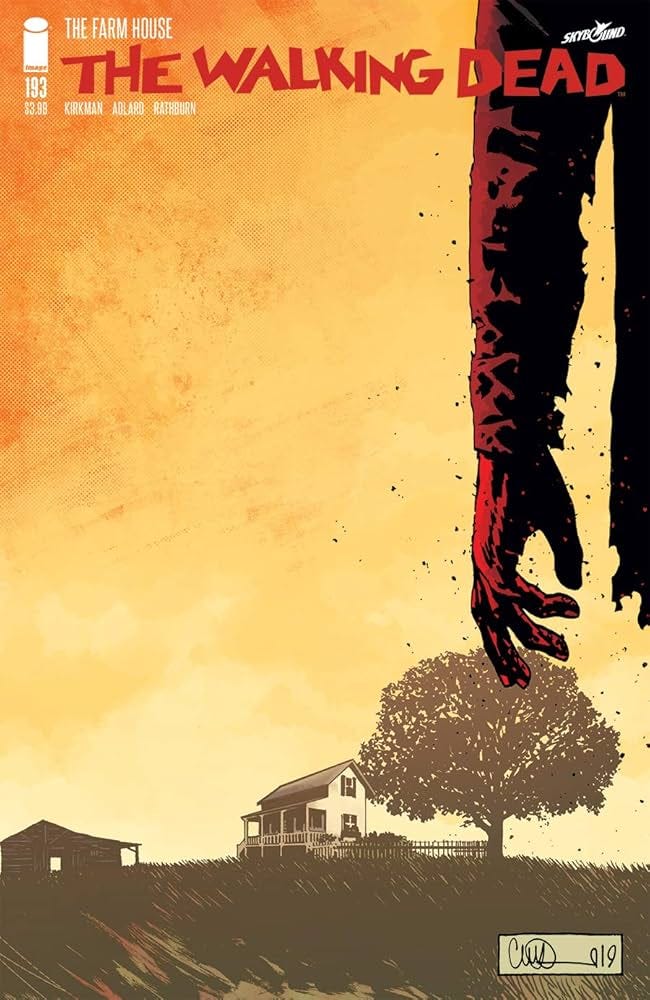
When Robert Kirkman decided it was time, in July 2019, to end his venerable comic-book series after 16 years, he gave readers a one-two surprise: first, at the end of issue #192, he killed off Rick Grimes, who never ceased being the tale’s protagonist; then, for the finale, #193, he moved the action 23 years into the future, showing how Rick’s now-adult son, Carl (who never perished), has managed to carry on, along with the whole rest of the world – at least, the extent of it that he and his fellow survivors have managed to see directly for themselves (looping back to the strict-POV rule).
(What underscored the shocking nature of these twists was the fact that issue 193 was, indeed, the final one ever to be made; wishing to keep the element of surprise as much as humanly possible, Kirkman went so far as to create fake solicitations and covers for issues 194 through 196, meaning that the abrupt words “the end” would land as a gut punch. Needless to say, the bold gambit produced a lot of strong feelings, one way or the other.)
In this future scenario, zombies may still exist, but they’re far from the immediate, civilization-ending threat that they were for the years leading up to this point; in fact, they now loom large in the cultural mind as something of a tall tale, or, at best, a circus attraction, a modern equivalent of the old freak shows. Human safe zones extend for as far as the eye can see, and they’re about to be joined up to stitch the entire country together for the first time since the fall of society. It is a world of justice and laws and (relative) safety, all made possible by the life, death, and never-ending sacrifices of Rick, who is honored as something of a new founding father.
Despite the parade of changes, both big and small, from this progenitor version of the narrative, it is hard to see AMC, Scott Gimple, and their various television offspring varying too far afield from this basic grasp of The Walking Dead’s premise: although humanity may not ultimately find a literal cure for all of its ills, it can find continued existence through sheer grit and determination. It is, one could argue, an inherently positive take: we human beings can adapt and survive in the face of nearly any odds – though, apparently, we have to dredge through the absolute worst of humanity in order to get there, over and over (and over and over) again.
And even if we never get the full story from the French.
More on this in the conclusion of these posts, which is now due next week.
Thanks for this. When our very real pandemic hit, I thought maybe The Walking Dead would adapt that as the reason it began, even though it was many years later.
I’m happy with the ending you’ve said the comics have. I’d love to see that play out in a final movie.